Wednesday, May 15, 2013

Damned if you do, Damned if you don’t

IMGP4596

Nature provides us the answer when we look silently. The decision making conundrum is always between logic and instinct.

Financial markets go up and down. We still refer to it as market sentiment. And sentiment follows not from logic

Our happiest choices in life almost always stem from last minute decisions. We do our painstaking research before venturing out to accomplish something. And more often than not, the rules change in the last minute. When faced with uncertainty, all logic goes out the window. We’re mentally stripped bare of all reasoning and decide based on our gut.

Great people, striking people are all those followed their instinct. Mozart, Beethoven, Van Gogh, Lincoln etc. Their conviction came from knowing and the knowing came from something deep within.

Naturally, following one’s instinct is a dangerous game too. Many a time, we go wrong and the repercussions can be disastrous. But picking oneself up and moving on to the next decision is all that keeps us going.

Logic keeps us on the boring middle path. Secure, predictable, average.

Instinct keeps us alert, shows us great successes and great failures. Its all about extremes. Like the delicate flower whose stamens stand exposed to the elements. There is great risk of death, of being crushed by even a mouse. But the choice to remain open gives the greatest gift. New Life.

Damned to more probable failures than successes if you follow only instinct. Damned to mediocrity if you follow only logic.

Which payoff would you choose?

Monday, April 15, 2013

The Delhi Factor

I received not one but two surprising exact responses. I was discussing career choices with two different married friends of mine at different times of the week. Both had openings in more than one city in India. The best job offers on paper came from Delhi. So I asked them whether they were relocating or not. And both gave me the same answer “Hey, its Delhi. I’m married. I don’t need the stress about my wife’s safety”. And the topic moved on from there.

What struck me later was the matter-of-fact way in which the answers came. It was fluid, accepted and unsurprising that Delhi is the rape capital. The way it was mentioned so casually is disturbing. We have mentally accepted that Delhi is not a place for women. And men find it harder to live there being in constant worry over their spouses and daughters. It is indeed quite shameful that we live in a country where the national capital has such a reputation.

Business Insider has named the 8 most unsafe countries for women tourists as:

India
Brazil
Turkey
Egypt
Colombia
Guatemala
Mexico
Kenya

The list above gives a glaring comparison on where India stands. While we claim to be a developed nation of nearly 1.1 billion, the remaining in the list are either underdeveloped, non-secular or very poor countries. To be in this list is a shame.

35% of women tourists have cancelled their visits to India which may be the right thing to do right now. After all, when a country cannot keep its own women safe, how are they going to safeguard outsiders. We are a country who take false pride in respecting our women, disallowing skimpy clothes in public and going around beating up couples on valentine’s day. On the other hand, we welcome item numbers by women who wear transparent clothes treating them like commodities.

The movie Khalnayak set a new precedent. I remember seeing hordes of gentlemen leaving the theatre after the song “Choli ke peeche” was over. People bought tickets just to see that song and then leave. I’m pretty sure they weren’t looking for spiritual enlightenment from Madhuri Dixit.

It is a known fact that no nation has prospered economically by ill treating either gender. And a simple survey of the developed nations show that the workforce has as many women as men working in jobs. The glass ceiling for women in top executive positions is another matter for discussion. The basic point is all about enforcing safety. And nations which respect their women do well.

Inspite of the above, change is happening in India. Women are taking to the streets, the media is keeping up the pressure and social networking is turning out to be a huge weapon for the masses. It is getting more and more difficult to push cases under the rug as it is on display for the world to see as it happens. This will be the best source of change for ensuring women’s safety in India. The initial set of protesters in Delhi following the Nirbhaya incident were arrested by the police who were trying to nip the problem in the bud before the gathering achieved a critical mass. But one of the arrested students quickly tweeted from the police van asking for help. By the time they were taken to lockup, another huge gathering had amassed at the police station. The police had to let them go.

Things will improve. But it will be painstakingly slow as the mindset needs to change first.

Friday, March 15, 2013

Zoom Lens vs the 50mm Prime Lens

Note: All photos on this post were taken with the Pentax K100DS and the Vivitar 50mm 1.7 Prime lens (made by Cosina from the late 80s or early 90s). Click on the photos to view them full size


Valley

There’s always that excitement when you’ve purchased your first DSLR that came with the kit lens of 18-55mm. The photos are much better right out of the box than the standard point and shoot cameras. Photos are clearer and sharper and offer more realistic colour rendering.

But after a while, there’s that creeping need for even better photos. After all, a well composed photo tells a story. And photography is all about composing a theme in two dimensions to tell your story. Based on you interests, you could opt for a specialized lens. But specialized lenses cost way more. Action photography, bird watching, nature shoots need a good telephoto lens which are expensive. But for the regular daily walkaround photography, there is much simpler option.

This is where the 50mm prime scores. How many times have you accidentally taken a stunning photo where everything just came together in perfection? I know I always go back to looking at those photos with pride. A prime lens makes this consistently possible. It has only one focal length which seems to be a limitation as one cannot close in on the subject or expand the area of focus. But the important thing to note here is that 50mm offers a field of vision that is very close to the human eye’s range. The prime ends up capturing almost exactly what we see with our visual range in a setting. This makes it more pleasing and natural.

The next logical argument would be that the kit lens offers a setting at the same 50mm. All that one needs to do is to set the focal length at 50mm and shoot. The crucial difference is that the quality of the image takes a beating with the kit lens. To make a zoom lens, there are many components required to work in tandem. As the cost of the lens has to be viable, there is a compromise made. Otherwise all lenses should take equally good photos. The complexity added in zoom lenses means the glass or plastic used in the lenses is of a slightly lesser optical grade. Those who wear spectacles know what I am talking about when I say optical grade.

Some of the major advantages of a prime are:

Forced Learning

A prime lens usually offers the ability to manually change the aperture over a wider range than kit lenses. And if the lens is a manual focus lens (as most of the older ones are), then there is a learning curve involved. Patience is required to get that right shot. It took me around a month to understand the various combinations of aperture, shutter speed and ISO for needs based on ambient parameters. For example, I learnt through trial and error that fast moving objects need a higher shutter speed (1/180 or more) and higher aperture (f2.8 or f2) to allow more light for a shorter span of time. The results were satisfying!

Girl


Affordable

There are so many older prime lenses available that are very very economical. The lens used to capture all the photos in this post was purchased for  INR2,800 ($52). Though it is just an above average lens, the sharpness and clarity trumps more expensive kit lenses. Sure, one can always achieve the same output quality with a much more expensive lens. But what’s the point of that when you can pick up an old good one for a fraction of the rate. Once I learnt to focus properly, I got good photos that were near perfect at even 100% enlarged.

SaladImage


No Zoom, Better Composition

The lack of zoom is actually a motivation to workout better. If you need a close up of the subject, you have to move closer physically. I had to walk for a while and finally get down on my knees, bend forward and backward to get this little tribal girl’s photo. It would have been so much easier if I had a zoom lens. I could have sat in one place and just zoomed in and out till I got the portrait. But what I saw was that I had to intimately understand my subject if I wanted a good photo. This got me working in tandem with her to finally get the right expression.

TribalGirlBW


Aperture Range

This is perhaps one of the most important advantages a prime lens has over kit lenses. Natural looking photos require no flash to be used. And low ambient light poses a challenge. Kit lenses have a maximum useable range of F3.5-5.6. This means photos in low light need to be taken with very low shutter speeds or a combination of low shutter speed and high ISO sensitivity. Low shutter speeds demand the need for a very steady hand. Below 1/10 it becomes harder to obtain a steady image. The other resort is to use a tripod or use the flash. Using a flash removes the attraction of a dim lighted scene.

A prime lens on the other hand can have a maximum aperture of f1.4. This allows the lens to allow in much more light and obtain sharper images with higher shutter speeds. This photo below was taken in a restaurant with very low yellow lighting. Achieving a reasonably sharp image of the glass became easy by setting the aperture at 1.7 and using a speed of 1/15; which would have been impossible with a kit lens with the camera being hand held.

Glass


Planar Depth of Field

At the widest aperture, the prime lens has the least depth. This means the lens only focuses on a very narrow plane of view. One can use this to keep only the subject in focus and blur the remaining foreground or background or both.  The narrow DOF allows for more creativity without the use of flash. There is much more to learn and training the camera to “see” what we see. It also forces us to learn to focus properly. The right photo makes is a wonderful result to see. There is more time to use natural light for those warm sunset sceneries.

Rangoli

Flowers

Prime lenses made for film cameras were made to work with the 35mm rolls. The sensors of the new age digital SLRs have a cropped sensor usually with a 1.5 ratio. That means an old 50mm prime used on a digital SLR is actually similar to a cropped telephoto. For example on the K100DS, the multiplier is 1.5 which means an SLR 50mm works like a 50 x 1.5 = 75 mm. This does not pose any problems as a focal length of 75 mm makes for great portraits as seen above. All other functionality remains the same.

So have fun shooting and if possible, experiment with primes. I do use my kit lens for most occasions. The manual focus prime is harder to manage but boy does it give me some satisfaction. Auto focus primes are a must have if one can afford it.

Thursday, January 10, 2013

Kasauli Castle Resort - Review

Kasauli, here we come! was the first statement we yelled when we woke up at 4.00 am to catch the flight to Delhi. The previous evening was all about packing and we were wondering if we should take the sweaters out of the attic. My false bravado led to me leaving the sweaters back in Hyderabad while my logically thinking better half and daughter decided to keep theirs in the suitcase inspite of weather.com showing the Kasauli temperature to be a sane 11 degrees Celsius. I learnt a valuable lesson - always trust the women. They go bonkers less often than males in their decision making.

The flight to Delhi was uneventful and boring. Indigo was as usual predictably on time. We were fidgeting all the way through and were thankful when the pilot landed the plane without the unnecessary bounce. Stepping out into Delhi for the first time, we realized the temperature was a little below 10. Felt great to feel the chill factor after so many years. Hyderabad just isn’t that cold anymore.

The taxi driver spotted us after many calls over the phone. We also realized our Hindi versions were a tad different. Hyderabadi Hindi and Delhi Hindi are more like Rajputs. Both are from the same breed but don’t accept one another. It took us about 10 minutes to understand that we were speaking the same language and the minor phonetic aberrations were forgiven.

 Dhaba

We had our first taste of the Capital city. Big roads, enormous space occupied and a long drive to get out onto the highway. A dense fog had settled bringing visibility to a few tens of metres. Traffic crawled and we were photographing the fog only to realize all the photos looked the same. Cloudy. Didn’t make sense. We kept the cameras back in the bag and enjoyed the lack of view outside.

In an hour, it was breakfast time and our driver introduced us to the famous Sukhdev Dhaba. My eyes ballooned till they popped and the driver’s horrified look reminded me that I needed to explain my almost naked eyeballs. There were over a 100 cars at this dhaba. Most of them had alloy wheels. Heck, even the 800’s had alloy wheels. And so many of them were mammoth SUVs or sleek German models. The driver then reminded us that we were in Haryana. We had only studied about Punjab and Haryana being rich but seeing it in person was a whole different experience. Money flows in these two states. Apparently, during season, there are over 300 cars parked outside the dhaba. Service is super fast with so much floating population.

The Aloo parathas and the Chole baturas with butter and achaar were the best we had ever eaten till date. Period. The tea could be scooped out with a spoon with all that thick cream in it. The food at this dhaba was simply awesome. Just stick to the items that they are famous for and one will not be disappointed. Aloo parathas were Rs. 25 and dosas were Rs. 40. Naaah, no south Indian dishes to be ordered in Haryana.

The rest of the way showed us the might of agricultural power in these two states. Just acres and acres of green fields for as long as our eyesight permits. Buildings looked rich and the people, richer. On the way, there was a stretch of car showrooms one after the other. Audi, BMW, Merc, Jaguar, Range Rover, Bentley, Maruti, Hyundai, Honda. Yes, I actually counted them. That shows the money present in these states. The highways were all 6 lane till Himachal Pradesh. The final town in Punjab was Zirakpur which was supposed to be just a town. The malls in this “little” town were about the same size as GVK One in Hyderabad. Multiplexes and McDonalds dotted the scenery. Wow, these ARE rich states.

Then came the first view of Himachal. The foothills of the Himalayas. So grand, so strong. The big difference we say immediately is that the Western Ghats are mountains of red mud. The Himalayas are impregnable stone. The vegetation is different, the color of the earth is different. And they are just so grand. Entering Himachal, the road began winding up into Solan. Roads are great here. Very few potholes, smooth and quick to navigate if you have a good vehicle. Our driver was swaying more inside the car than the car actually was. The beauty of Himachal is the glorious view at every turn on the mountains. Rows of undulating mountainous stretches welcome us. Every view is breathtakingly different

IMGP1263     IMGP1267     IMGP1262

We finally turned left from Solan to see a stretch of very bad narrow roads that led us to Kasauli. Nearing the Kasauli market, we saw that this place still had its old British charm. Kasauli has an Airforce base which is still operational. There are over a 100 resorts here and the advantage for all of them is the God given view. We finally reached the Kasauli Castle Resort, stopped, opened the door and…….

IMGP1382     IMGP0981     IMGP0993

My word! It was so cold! I cursed the folks at weather.com and hoped they would freeze for a minute in their cozy office cabins. I began doing a dance not invented till now. We ran into the reception area, kept dancing and asked what temperature was. The gentleman pointed to the thermometer. It registered all of 1 degree. One degree. I mumbled another curse as my bone marrow began complaining and my toes refused to react. I couldn’t feel my nose and wondered if I was born with ears. All physiological extremities felt unwanted.

But coming back to the resort now. Kasauli Castle Resort is highly rated on tripadvisor which caused us to select it for our stay. And they did not disappoint at all. We took the 4 days/3 night package for a couple which included breakfast, dinner, complimentary tea and a fruit basket. Yes, a fruit basket.

Location: The resort is located at a fairly higher altitude than most other resorts. It comes with a great view and if one walks up the same road for just half a kilometer, there are fantastic views of mountains from there. Kasauli is a place to explore by walking around. There is nothing much to do here. It is a place for relaxing and unwinding.

Rooms: The rooms were neat and clean, well maintained and smelled of sweet tobacco. Not tobacco smoke. But sweet tobacco which is a warm and welcoming smell. The room came with an LED TV, Tata Sky connection, a room heater, a kettle, water jugs, blankets and a cupboard with hangers. The spic and span bathroom had a water heater, towels, soaps, toothpaste all provided by the resort. Complimentary tea, milk and sugar was also present. As they say, a picture speaks louder than a thousand words. There is a nice mini-bar with resonable rates for liquor. So here are the pictures of the room.

IMGP1110     IMGP1109    IMGP1127

IMGP1125     IMGP1123    IMGP1116

IMGP1130    IMGP1113    IMGP1112

Service: This is why the resort has such high ratings. The staff are extremely polite, courteous and responsive. They attended to our every need with a smile. They never hang around for tips and never ask anything other than what is required. Two names to be mentioned here are RK (Rajender Kumar) and JK (Jeetender Kumar). RK was always helpful and went a step ahead to suggest and get anything done for the occupants of the resort. I did make a miserly request which he fulfilled the very next day. There was no point in my buying another sweater in Kasauli for just 2 days only to bring it back and stash in the attic again. So I asked RK if he could spare me a sweater or jacket for the 2 days. He just said “no problem Sir” and got me one of his own the very next day. Now that’s customer service. I returned the jacket on the last day and will keep memories of it in my photos. We did not find any sad or frowning faces here among staff. Service at this resort is indeed great. Room service is very quick and the staff are ready to do whatever they can within their limits to accommodate requests.

Food:  They have a great and exhaustive menu that covers Continental, Chinese, North and South Indian dishes. The resort was flexible enough to a large extent. On the day we arrived, there were only 2 rooms occupied. It did not make much sense to open a buffet counter. Instead, they let us order a-la-carté and did not charge us anything extra for it. It was like having your pick of food free of choice. Coming back to the dishes, let me be frank. The noodles was very Indianized. But then, these guys are mostly Himachali and Bengali. So we decided to stick to the Indian dishes. And they did not disappoint. All Indian dishes were very good and were made exactly how we liked them. We heard some of the other guests say that their sizzlers too were excellent but it was a common opinion that their Indian food tasted the best. The next day, the resort was nearly full and the buffet section was opened. Once again, their Indian items were the best. The Chinese items were just above average. They also make great omelettes and sandwiches for breakfast. So no complaints from us as they are excellent in preparing one set of items.

IMGP1237   Dining   Bar   

Facilities:  The resort has a DJ and dance floor, an XBox Kinect, a foosball table and a snooker table. Many resorts charge on an hourly basis for using these but all were free here (except for the air hockey table) for as long as one wanted. Movies are also screened everyday on the projector for those who wish to sit in the lawns in the evening and feel the breeze. On the first floor is a children’s park with swings, a slide, see-saws and a hammock. Kids would enjoy their time here while adults relax.

IMGP1225    IMGP1145    IMGP1135

Highlights: I nearly forgot. Even though the resort was not full for the 3 days, we were still treated like royalty. When we booked the hotel, we were informed that children would be charged extra over the package rate as it was only for couples. During checkout, we went to pay the extra and were informed that our child was not charged. When asked why, the staff said that since our child ate so less, there was no point in charging anything extra at all. That was a pleasant surprise for us. The manager then informed us that they observe their guests keenly to satisfy all their needs. But as part of the observation, they are also flexible on the final charges especially if the guests have not consumed much. That is truly great customer service.

This resort is great value for money. Rest assured that we recommend this place whole heartedly. We may not visit Kasauli again but if we do, we know where to stay. By the way, the morning walks up the road by the resort are very enjoyable. The evening walks give a great view of the sun rays coloring the mountain tops.

There are not too many attractions at Kasauli. As mentioned before, this is a place to walk and explore. The most important sight which should not be missed is the Manki Point which is in the Airforce base. As this is a restricted area, no cameras or phones are allowed. But the view from the top at 6430 feet is amazing. On one side is Chandigarh and the other side is Kasauli. And when the clouds form, the view is magnificent. We spent nearly half an hour just sitting and watching the great Himalayas as they kept rising in height. On the second day, the air was clear. The Airforce officials remarked saying that the visibility was well over 200 kms from the top. And we could see the snow capped mountains from so far away. Truly marvellous.

SnowMountains    Sunset2    Sunset1

The sunset point is a very romantic spot. Old English homes are still present and the orange rays change shades as you see the sun setting below the horizon with pine trees in the front. Unforgettable.

English    IMGP1390    IMGP1384

Many memories abound after the trip. The undulating mountains, the cable car ride at Timber Trails, the glorious sunsets, the misty mornings and the superb service of the staff at Kasauli Castle. Definitely recommended.

Monday, November 19, 2012

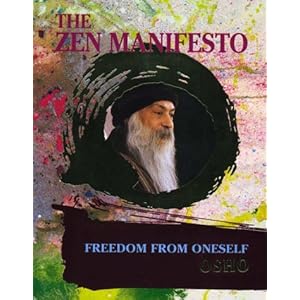
Osho – The Zen Manifesto – Freedom from Oneself

One of the last series of talks given by Osho before his demise, this book is a gold nugget. Osho unravels the mysteries of Zen by approaching it with a totally detached view of religion. It applies to any human who can read and understand or is willing to look at the fact that there could be a key to getting out of the daily routine of days, routine of the life-death cycle, routine of re-incarnation.

The talks made in this book are like a final message with no holds barred on the truths. It has an affinity to the Advaita Vendanta (non-duality) which offers a structured methodology of scriptures and renouncing oneself under the guidance of a Master. However, the major difference is that while Zen too can be practised under a Master, it is more about bypassing or going over the mind completely.

Our identity, our individuality, our saneness are all due to the mind. We call ourselves by an assigned name in this birth because it was given to us. It is important too as we need to survive the lifetime. But after a stage, the search for the Supreme, God, Higher Self, the Nothing or Oneself or whatever one may call it begins to happen only when we question our own actions and decisions.

The Western Zen authors such as Alan Watts and Thomas Merton have also approached Zen but through the intellect which is exactly what Zen is not about. It is about having no mind at all. The mind is the bridge between the soul and appeared sanity. Zen shows that you never had a name or individuality. You were just living in a cage built by others to safeguard your identity. Zen shows you how to open that cage and melt into the vastness and disappear; or what we know as anatta which means ‘‘the freedom from oneself’’.

The complete book can be found here. The Zen Manifesto- Freedom From Oneself - Osho

Thursday, November 08, 2012

The White Rose

CloseUpRose

There is something in a white rose that forces rapt attention. It comes in just one colour – white.

Ask any man what he thinks of when he sees a white rose and most probably the order of priority would be his special woman, purity, trust, the untouched.

Ask any woman what she thinks of when she sees a white rose and she may choose purity, innocence, trust, understanding, commitment

The white rose also signifies peace, calm, spirituality, serenity, respect and virtue in love.

Notice that no two roses are the same just like us.

They are never symmetrical just like us.

The petals go in layer after layer till there is nothing within just like us.

Their attraction is in their unseen fragrance just like our unseen vibes.

Perhaps that is why we have never really understood what draws us so much to this ubiquitous, colourless and yet a truly enigmatic creation of nature.

So take some time off and go gift a rose. Its uplifting.

Wednesday, October 31, 2012

Many Lives, Many Masters–Dr. Brian Weiss


many-lives-many-masters-700x700-imadat2ad6vyjzym

Dr. Brian had great guts to write this book. He went against his career rules of scientific learnings and wrote about what he found when regressing into his patients’ past lives. This book is a strong reminder that all that we see is not all that is.

It also gives us a glimpse of the soul and how we operate in other dimensions. Being metaphysical, it will be hard to digest as nothing is proven. But just because it isn’t does not make it untrue.

The book also shows us how caught up we are in the circle of routine and life. There were some lovely lessons that I picked up. If only I could apply them now.

Most of all, this book was recommended to me by someone who saw in me what I could not myself. I thank this gentleman for seeing me as someone worth spending precious time with. But then, I guess that is how the world goes around. Not by routine, but by what energies we share with one another to ensure a common uplifting of all life.

Tuesday, October 09, 2012

Understanding


How many times have we said “I understand” and bobbed our heads in seeming agreement when someone has shared a tale of sorrow or despair? The question is do we really understand or is it like saying “Hi, How are you” everyday without really giving further notice to the answer “Fine”. Are we really fine?

IMAG0410

What is “understanding”?, a knowing, a perception, a feeling, an agreeing, an experiencing…..Such a commonly used phrase “I understand“ never fails to surprise. Because let’s face it. We can really understand only when we have faced the exact set of circumstances which led to the experience. Makes me ponder over the fact that what is it that we understand of a situation whenever we utter those words. Is it that we understand how good or bad the situation is? Or is it that we understand the feelings or emotions involved? Or is it that we understand the intensity and depth of the circumstance? Or is it that we just agree with the situation as it being true?

It is entirely one’s own perception as to how we look at a particular situation which actually leads to various “understanding’s by different people… So when we say ‘I understand’ is absolutely a different perspective when compared to the person with whom I’m saying these words., Certain situations, especially when dear ones are involved, saying it is more like saying “I’ve been through the same feelings and so I know how you feel” or it could mean “I know and totally agree with you and so I understand” But the question is do we really understand? If so , what is it that we understand?

An addiction, a desperate wish to do something, these are cases where the mind just takes over. And as curiosity can never be killed, one has to go through the motions of this experience to really feel the end to that desperation. In this case, Experiencing is Understanding, in fact, a true Understanding…but yet another perception.

A child falls and gets hurt, runs to the parent’s arms in tears, an immediate gesture from the parent is “ I know, I understand, it hurts” Knowing is Understanding….,A person expressing his emotions about a dear one to a friend, a supporting phrase from the friend, “ true, I understand”…. In this case, Agreeing is Understanding..

Understanding is more like a combination of knowing something since it was felt before and agreeing to it and also the other way round.. Another perception. Understanding is not truly ‘understanding’ but just a perception of how it might be, how it could have been.. But the intensity is not felt to the same extent as the one who is experiencing. It is just a percentage of the feelings felt due to our past experiences similar to those which are being discussed.

Tuesday, September 18, 2012

Fire On Ice–How to photograph


FireOnIce1 copy

Achieving this photo was a tiny wish of mine. A theme composed on two opposing natural elements makes for a nice challenge to shoot. Following are the equipment and method used:

Pentax K100D Super. (Any good digital camera will do. Ideally a DSLR.)

Vivitar manual 50mm f1.7 Prime (A Lens with a minimum of f2 or below would be useful since the shoot demands a low light situation)

Ice Cube. Clearer the better. (My freezer makes only opaque ones)

Zippo Lighter Fluid (for smokeless fire)

Matchbox

Granite or black glass base (Any dark colored base to help with the reflection in the darkness)

The camera was set to Manual with an F-stop of f2 and shutter speed 1/10 and ISO 200 (for less grain) and hung around the neck. An easier and guaranteed way would be to set it on a tripod if you have one for the perfect shot. The lens was focused to the required focal length from the target.

Lighter fluid is a petroleum distillate and floats above the water or ice but burns bright and quick without any smoke. The attempt was made to shoot the initial spread of fire with the blue hue along with the yellow combustion.

The lights were switched off at night for complete darkness. The ice cube was taken out of the freezer quickly and placed on the target area. The match was the lit and held in one hand and the zippo fluid was poured on the ice with the other hand and lit immediately.

The match was thrown aside, the zippo can was kept away and the camera was used to shoot in quick succession by keeping the shutter speed constant and varying the aperture between each shot from 1.7 to 2.8.

Next the process was repeated to light up the cube and three more photos were shot in quick succession keeping the aperture at f2.0 and varying the shutter speed to 1/8, 1/10 and 1/15.

FireOnIce2 copy  FireOnIce3 copy

Six photos and the best of what I could do have been posted here.

I would welcome any suggestions or tips to improve this theme. The difficult part is working with very low ambient light.

Thank you for reading.

Monday, July 30, 2012

Hsin Hsin Ming – The Book of Nothing


Rarely has a book moved me into just shutting up. Books instill anything from breezy natured laughs to deep crusted messages languishing within us for a few days or months depending on the passion of the author pouring out years of experience transformed into words. But this book has been something of an anoetic paradox. It is a mirror without the silver coating that shows us the simplicity of our existence.

Hsin Hsin Ming is the best known words of the laconic third Zen patriarch, Sosan (Sengstan). The concept of Zen was born sometime when the Buddhism of India met the Tao of China.

Sosan was a Master of very few words. His statements had dimensions of depth in them which was difficult to interpret by the common man. Hsin Hsin Ming has been regarded as such a great set of principles by Osho that he translated it for the benefit of others.

The words in this book are the result of a wonderfully distilled set for you have the best coming out of Sosan, Buddha and Osho merely interpreting our daily predicaments as we search for our true roles in our lives. Existing and living are two completely different things. We desire fame, recognition, individuality while water, earth and air move naturally towards the depths.

I can do no justice any further in describing the book. Below are three humorous excerpts which answer many simple questions. For those confused between the head and the heart, this book offers solace, a path and a figurative slap on the face. A must have.


Truth1 Truth2 Beggar1Beggar2 Philosopher1 Philosopher2